
Every hotel renovation has the same hidden line item, and it almost never shows up in the contractor’s bid. It’s the question of where everything goes. The old case goods coming out. The new FF&E arriving six weeks early because the factory shipped on time for once. The lobby furniture that has to disappear for a month while the floors are redone.
Hotel renovation storage is the piece of the plan that decides whether you close two floors or four, whether the new mattresses sit in a ballroom you could have been renting, and whether your engineering team spends the summer moving boxes instead of doing their jobs. This guide walks through how Central Texas hotels handle it, what tends to go wrong, and where mobile storage fits.
Why Hotel Renovations Break on Storage, Not Construction
Construction schedules are usually fine. General contractors are good at sequencing drywall and paint. What breaks is the logistics on either side of the work.
Picture a 140-room select-service property in Round Rock doing a guest room refresh, 20 rooms at a time. Each 20-room block produces 20 headboards, 20 desks, 40 nightstands, 20 armoires, and 20 rooms’ worth of soft goods. Some of it is going to a liquidator. Some is going to a sister property. Some is being held because ownership hasn’t decided. And the replacement FF&E for the next block is already on a truck.
If that inventory has nowhere to go, it lands in the hallway, then in a meeting room, then in the parking garage. Every one of those places is a place you can’t sell or use.
The Cost Nobody Budgets
Comped rooms are the obvious cost. A meeting room that holds 200 boxed lamps for six weeks is a meeting room that isn’t generating catering revenue. Less obvious: the damage. Case goods stacked on a garage floor in July get warped drawers and scuffed finishes. Mattresses stored in an unconditioned back-of-house hallway pick up humidity. Then you’re replacing new product before a guest ever sees it.
The Three Storage Options Hotels Actually Use
Most properties end up with some blend of these.
Back-of-house space is free but finite, and it’s usually already full. Fine for a small soft-goods refresh. Wrong for a full guest room renovation.
Traditional self-storage means a unit across town, a rented truck, and staff or contractors driving back and forth. It works, but every trip is labor, and the unit is only accessible during someone else’s hours.
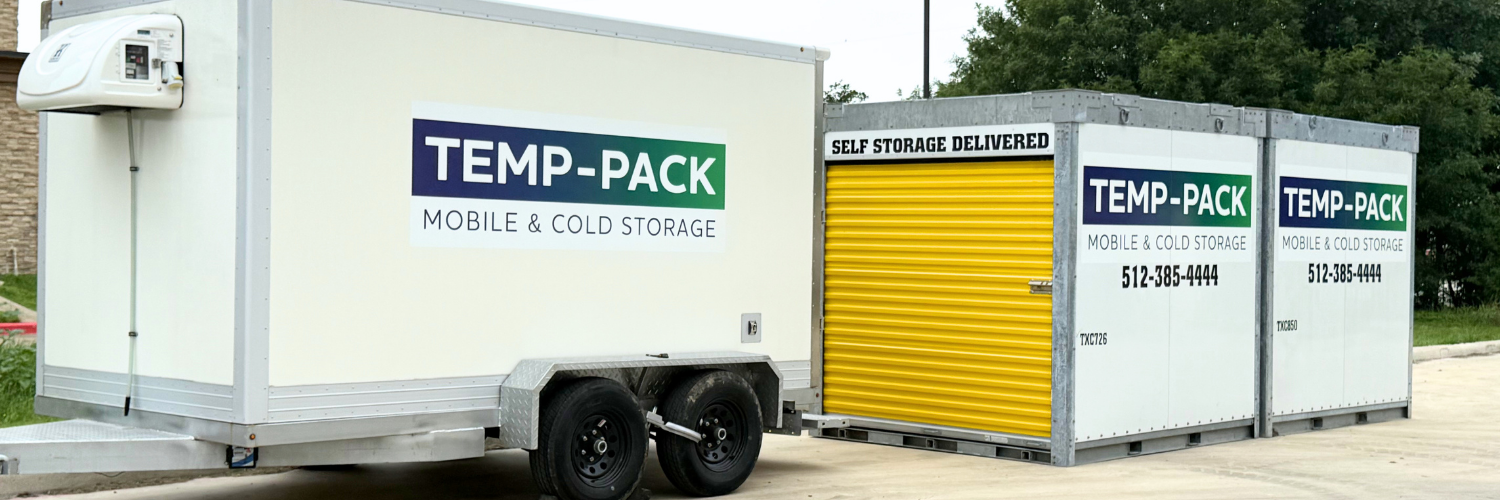
Mobile storage containers are delivered to the property and placed where you want them, near the loading dock or on the far edge of the lot. Crews load directly from the renovation floor. When a container is full, it either stays on-site for continued access or gets hauled to a climate-controlled warehouse until you call for it. The hotel never has to arrange transport.
From the Loading Dock: The single most useful move a GM can make is asking for two containers instead of one. One holds outgoing furniture and gets hauled away. The other holds incoming FF&E and stays on-site. Nothing gets moved twice, and the contractor always knows which door to open.
On-Site vs. Warehoused: Deciding What Stays
The right split depends on how soon you’ll need each item back.
Anything the contractor needs weekly belongs on-site. New FF&E for the next room block, tile and fixtures, tools the trades don’t want to haul home. On-site storage containers sitting at the dock give the crew access without a phone call or a scheduled delivery.
Anything you won’t touch for a month or more should leave the property. Lobby furniture during a floor replacement. Restaurant seating during a kitchen rebuild. Case goods awaiting a resale decision. Those go into a container that gets picked up and stored in a climate-controlled warehouse, then redelivered when the space is ready.
What Belongs in Climate Control
Upholstered pieces, wood case goods, artwork, mattresses, and anything electronic. Central Texas humidity and a steel container in direct sun are a bad combination for veneer and fabric. If the piece is going back into a guest room, treat it like it’s already in one.
Signage, metal fixtures, tile, and packaged hard goods can usually ride out a few weeks in an on-site unit without trouble.
Timing the Delivery and Pickup
Container delivery should land the day before demo starts, not the day of. Crews start pulling headboards at 7 a.m. and they need somewhere to put them at 7:05.
Set the placement with your GC and your chief engineer together. You want a spot that’s reachable from the freight elevator or dock, doesn’t block fire lanes, and stays out of the guest sightline if possible. This is where the delivery equipment matters. TEMP-PACK’s TempTrack lift system sets a container level and flat on the pavement with a wireless remote, which means it can go into a tight corner of the lot without tearing up the surface or needing a ramp.
Plan pickups around room-block turnovers. When block one is done and block two starts, the outgoing container gets swapped or hauled, and a fresh unit lands for the next set of rooms. A good storage partner will build this cadence into the schedule with you rather than making you call each time.
Counterpoint: Some owners resist paying for storage on a renovation because it feels like an add-on. Consider the alternative math. If storage keeps even four rooms a night in inventory over a 90-day project, the container has usually paid for itself several times over before you count the furniture it kept from getting damaged.
Where TEMP-PACK Fits for Central Texas Hotels
Few storage providers in Central Texas match TEMP-PACK’s setup for hospitality renovations, and it shows in how quickly a property can get containers moving. Their business storage solutions cover the full range hotels tend to need: multiple container sizes, on-site placement, climate-controlled warehousing at their 49,000-square-foot Buda facility, and a local dispatch team that answers the phone. They also run refrigerated units, which matters if your renovation touches the kitchen or banquet operation and you need somewhere to keep inventory cold.
TEMP-PACK serves Austin, San Antonio, Round Rock, Cedar Park, New Braunfels, San Marcos, and the corridor in between. If your property is in that footprint, the container can usually be on your dock within days.
Checking Out of the Storage Problem
Storage won’t make your renovation faster, but it decides whether the rest of the hotel keeps running while the work happens. Get the containers scheduled before demo starts. Keep the new FF&E somewhere the humidity can’t get to it.
If you have a renovation on the calendar, request a quote from TEMP-PACK and walk through the phasing with their team. Bringing the storage partner in at the planning stage is cheaper than bringing them in at the crisis stage.
FAQs
What’s the best hotel renovation storage setup for a phased guest room project?
Two containers on-site, one for outgoing furniture and one for incoming FF&E, plus a climate-controlled warehouse for anything you won’t need for 30 days or more. Swap the outgoing container at each room-block turnover. This keeps hallways and meeting rooms clear and keeps new product out of Texas heat and humidity until installation.
Can a storage container stay on hotel property for the whole renovation?
Yes, and for the on-site unit that’s usually the point. Placement should be agreed on with your general contractor and chief engineer so the container sits near the dock or freight elevator, stays clear of fire lanes, and stays out of guest view. TEMP-PACK lets you keep the container as long as the project needs it, so a schedule that runs long doesn’t create a storage problem.