
Refrigeration Rental for Sporting Events

Solicita un presupuesto gratuito
Put refrigerated storage into the event setup
Bring TEMP-PACK refrigerated trailers into the food and drink plan for a stadium event, tournament or outdoor sporting venue. We discuss the products, required conditions, loading needs, property and dates with the people arranging and operating the rental.
Connect the venue organizer with concession vendors, team food contacts and hospitality operators. Plan from receiving before the gates open through match schedules, replenishment, overnight use and the removal of remaining stock. Our Buda based team serves Austin, San Antonio and Central Texas, with the offered equipment and exact site reviewed for each request.
Start the sporting event cold storage plan
Tell us the venue, food and beverages, required conditions, quantities and full dates. Include receiving gate windows, power, loading needs and the approving organizer and food operator contacts.
Choose delivery or pickup to begin the equipment, availability and complete quote discussion. The offered setup, pickup approval and final price are agreed separately. You can also use our cold storage request form.
Need help choosing?
Call 512-385-4444
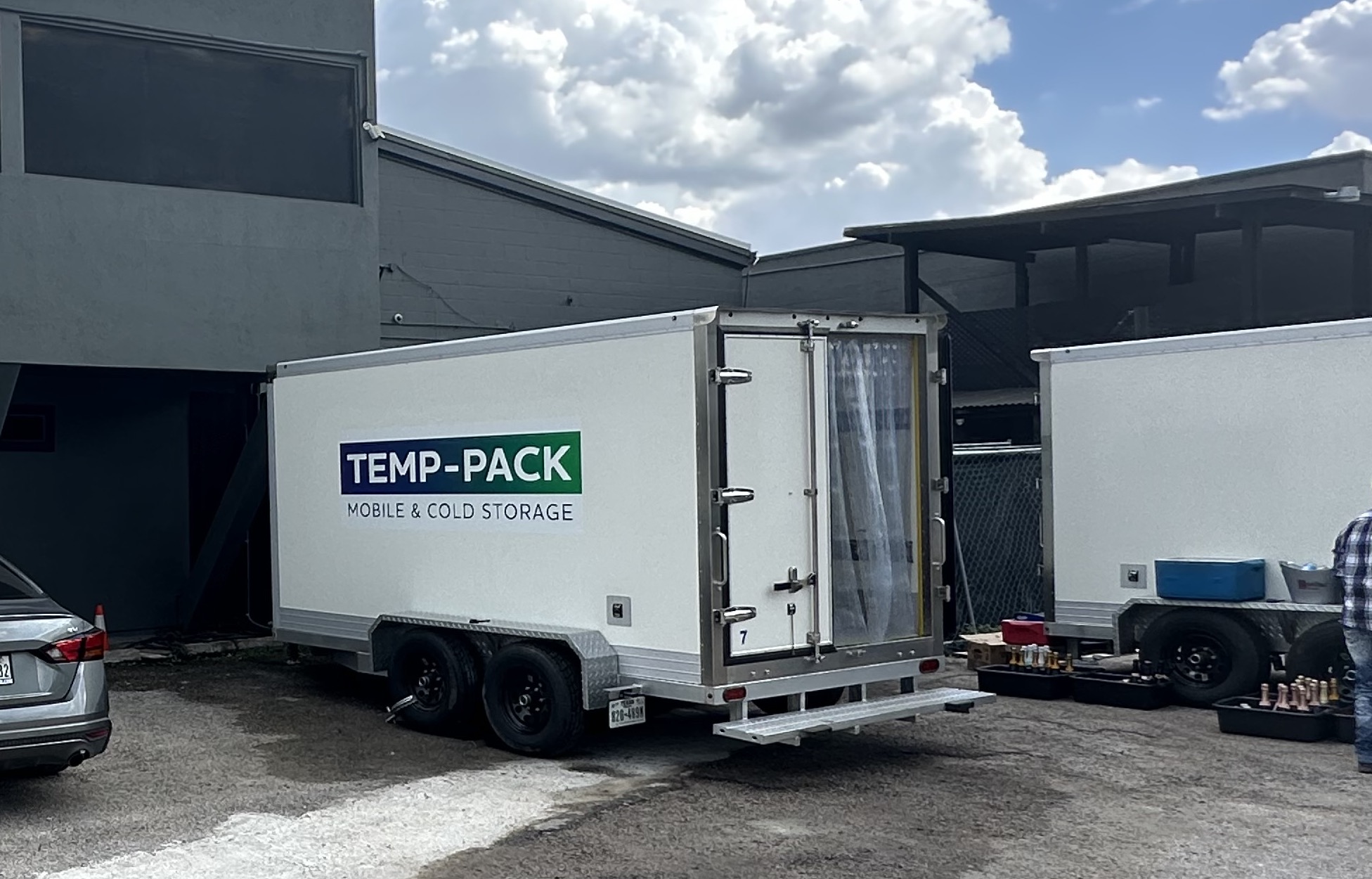
Our refrigerated trailer for event food storage
We review the offered trailer and configuration around the food, beverages, packaging and retrieval pattern. Bring the quantities and conditions the food operator requires into the discussion before choosing equipment.

Our portable cold storage equipment
Our published offer lists an 8 × 12 foot refrigerated portable storage trailer with a starting figure of $149.99. Request the current offered unit, configuration, availability and complete written quote for your event dates. The figure does not establish a rate period or total event cost.

Plan the load around service
Identify goods needed for opening, replenishment and later matches. We review usable space, loading access and operating requirements for the offered trailer. A footprint alone does not establish food quantity or payload.
See our wider cold storage service and business cold storage options.
Plan storage around the people serving food and drinks
A concession point, team food area and hospitality service can draw stock at different times. Separate the inventories and operating contacts so the trailer plan follows the event.
Concession stands and vendors
List the food and drinks for each concession point, receiving dates and replenishment needs. Identify the vendor responsible for each load and the people allowed to retrieve it, especially when storage is shared.
Team food areas
Describe ordinary food and beverages for the team service, the receiving contact and access windows. Connect retrieval with the team schedule and the operator responsible for the food. Keep medical or clinical supplies separate for exact review.
Catering and hospitality
Include receiving, prep, service and unloading for catered or VIP areas. Name the hospitality operator and any separate loading point. See catering and food service cold storage for that operation.
Outdoor and tournament service
Give the match days, trading periods and overnight storage requirements. Include stock remaining between rounds or days, the people checking it and the location receiving unsold food after the event.
For ordinary event furniture, boxed materials and signage, use our separate dry event storage route. Food needing refrigeration has its own equipment and operating plan.
Cover the full schedule before and after the matches
1. Receive before public opening
Agree the venue gate, access window and receiver for the trailer. Include setup, startup and readiness checks before loading food, rather than planning only around kickoff or the first match.
2. Load for opening and replenishment
Coordinate incoming food, vendor inventories and goods needed first. Keep loading and retrieval duties with the responsible operators and the agreed access route.
3. Work through matches and overnight use
Include breaks, a doubleheader or repeated match days in stock and staff planning. Assign checking, retrieval and power contacts for overnight or closed venue hours.
4. Remove stock and arrange collection
Confirm where remaining food goes, who unloads it and the agreed return condition. Keep the collection route available after public departure and coordinate the equipment receiver.
Connect the venue organizer with the food operators
We discuss the rental with the approving contact and the people receiving and operating the equipment. One clear contact plan helps connect venue decisions with daily food storage use.
Venue organizer or purchaser
Name the person approving the rental, payment, position and changes. Include supplier entry requirements, gate windows and the invoice contact in the discussion before arranging equipment.
Vendor or food operator
Have each responsible operator define food requirements, packaging, loading and checks. If several vendors share equipment, agree inventory separation, authorized access and who coordinates the overall operating plan.
Venue facilities and receiver
Give us the site receiver, power contact and person able to act during matches or closed hours. Include who can approve changes and who meets collection after the event team starts leaving.
Agree the receiving gate, trailer position and power
Arrange property permission with the venue contact and share the exact entry point and proposed standing area. Tell us about surfaces, gates, turns, overhead obstacles and any route changes caused by event setup.

Receiving and collection access
Connect the trailer with supplier receiving and food retrieval. Coordinate the loading route with tents, fencing, work areas and other deliveries. Keep the agreed route clear through collection, not just the public event period.
Loading and operating space
Describe food packaging, loading needs and expected door use. Give the available power information and a facilities contact able to discuss the offered unit connection, cable route and extra equipment proposal.
Include power for the entire period, including overnight or consecutive match days. Review any proposed generator against the offered equipment and site. Agree contact details and actions for interruptions; a venue outlet or proposed supply is not automatically suitable.
Agree condition and readiness before food goes in
We review the offered equipment, handover and instructions with your receiver. Food operators remain responsible for food requirements, handling and checking procedures through the event.
Condition and startup
Discuss cleaning, inspection, requested cooling or freezing mode, startup and readiness checks. Tell us about any required documentation before arranging the rental and confirm the agreed condition at handover.
Loading, access and checks
Assign equipment and food checking duties with loading and retrieval contacts. Include opening, busy service periods and overnight use. A thermostat display alone does not establish the condition or readiness of food.
Changed requirements or concerns
Agree the contact plan for a power interruption, equipment concern, altered match schedule or new stock requirement. Tell us about changes before relying on a revised arrangement.
Describe chilled and frozen product groups separately. We review the offered configuration rather than assuming simultaneous zones, a numeric temperature range or unrestricted stock capacity. Any movement with food also needs separate review; rental does not establish loaded refrigerated transport or active cooling in transit.
Quote the complete event rental period
Include receiving, setup, startup, loading, service, overnight use, stock removal and equipment collection in the period. Shorter events and longer tournament requirements are reviewed against availability and the written scope.
- Equipment and inventory: offered trailer, configuration, food, beverages and load.
- Venue and movements: address, gate windows, delivery, collection or approved pickup arrangements.
- Operating period: setup, matches, trading, replenishment, overnight use and finish stages.
- Full charges: rental, transport, handling, taxes and other agreed equipment or services.
Compare cold storage pricing for the same period and scope, then use the cold storage request form. Contact us about changed dates, inventory or venue access before the next stage.
Customer experiences with TEMP-PACK


Click360 cold storage recognition
2026 Click360 B2B Business Leader Awards
View the Click360 cold storage award linked from TEMP-PACK’s website. Read the award page for the category and its published details.

Questions about sporting event refrigeration
What information starts a sporting event refrigeration request?
Send the venue, food and beverages, required conditions, quantities, power and full dates. Name the approving organizer, food operators, receiving contact and facilities contact, with gate access windows.
Can storage be planned for stadiums, tournaments or outdoor events?
Give the exact site, event days, service areas, food requirements and access details. We review the offered equipment, position, power and availability for that plan. An event description alone does not confirm a suitable site or available trailer.
How should several concession points share a storage plan?
Identify each vendor inventory, food operator and replenishment needs. Agree who approves the rental, coordinates loading, controls access and checks the equipment. Keep responsibility for each food load clear.
What should a team food area include in the request?
Describe ordinary food and beverages, receiving dates, retrieval needs and the operator responsible for them. Include team service windows and venue permission. Medical equipment and clinical supplies require a separate exact review.
Which route covers hospitality or event catering?
Use catering and food service cold storage or event and festival cold storage. Include receiving, prep, service, overnight storage and unloading for the relevant food operation.
How do receiving gates affect the rental dates?
Give the entry point, supplier access windows and person meeting the trailer. Allow for setup, startup, readiness and loading before public gates open. Include collection access after the event as a separate part of the plan.
What changes for a doubleheader or repeated match days?
Include stock needed between matches, replenishment, overnight operation and the staff handling each stage. Plan the full rental period through remaining stock removal and equipment collection rather than only the first game.
What does the published 8 × 12 foot offer mean?
It describes a refrigerated portable storage trailer. Review the current offered unit, usable space, loading access, configuration and availability for the event. The footprint does not establish a food quantity or payload.
Is $149.99 the full sporting event price?
It is the published starting figure with no rate period established here. Request the current equipment and complete written quote for the period, movements, handling, taxes and other agreed items.
Can we request cooling or freezing?
Describe food groups and required conditions with the responsible operator. We review the offered configuration. Do not assume simultaneous chilled and frozen zones or a numeric temperature range from a general trailer description.
Who arranges venue permission and the trailer position?
Coordinate permission with the responsible venue contact and share the proposed standing area, surface and route. We review access for the offered equipment, loading and collection; a parking or event space is not automatic placement approval.
What power information should the venue provide?
Give the available supply, proposed position and cable route with a facilities contact able to discuss the offered connection. Include any generator or extra equipment proposal and the full operating period, including overnight.
When can food be loaded after arrival?
Agree condition, cleaning and inspection requirements, operating instructions, startup and readiness checks with the receiver and food operator. Arrival or a thermostat setting alone does not establish food readiness.
Who handles overnight checking and operating concerns?
Assign food and equipment checking duties, power contacts and access responsibilities for closed hours. Agree the actions and contact plan for interruptions or equipment concerns before loading.
Can vendors collect a trailer instead of arranging delivery?
The cold storage form provides both choices. Describe the proposed vehicle, towing, collection and return arrangements for review. Selecting pickup begins that discussion rather than approving the setup or setting hours and charges.
Does rental include transport with food on board?
Describe any loaded movement separately from stationary storage. Review the route, products, equipment and operating requirements. Rental alone does not establish refrigerated transport with food or active cooling in transit.
Can medical equipment or specialist supplies be stored?
Provide exact contents and technical requirements for separate technical and business review before any such use is arranged. This event food storage plan does not establish clinical suitability, medical approval or an athlete safety outcome.
How should we discuss cleaning and inspection?
Tell us the handover and documentation requirements for the event before arranging the rental. Review what is offered and agreed with our team and confirm the equipment condition with the receiver.
What if the match schedule, stock or venue setup changes?
Contact us with revised dates, goods, power or access details before relying on the new arrangement. We review equipment availability, the rental period and quote changes. A changed match date does not automatically extend the rental or reserve a trailer.
What must be ready for stock removal and collection?
Arrange the destination for remaining food, unloading responsibility, return condition and collection contact. Keep the agreed gate and route available after public departure and confirm keys or accessories. Use our cold storage request form to start the full plan.
Tell us about the venue and food service plan
Bring us the inventories, organizer and operator contacts, receiving windows, site and power details, and full dates. We will discuss the offered trailer, operating period and complete quote.