
Portable Storage for Businesses

Solicita un presupuesto gratuito
Solicita un presupuesto gratuito
Choose commercial storage around your project
TEMP-PACK offers commercial portable storage for business projects around Austin, San Antonio and nearby Central Texas communities. Discuss space for approved furniture, equipment, supplies or stock during a move, renovation, event or change in operations.
Start with the industry links below, then decide where the contents need to stay. A container at your property, facility storage and transport between addresses have different access, timing and cost arrangements. Share the project, contents and dates with the team before choosing a unit.
This is a dry storage service. Goods needing refrigerated or other specific environmental conditions require a separate suitability discussion. Use the refrigerated storage service for the equipment and conditions your goods may need.
Plan your business storage or move
Have the delivery ZIP code, intended contents, preferred date and expected rental period ready. Include a destination ZIP code if the container needs to move loaded.
- A container kept at your business or project site
- Facility storage and later redelivery
- Transport between agreed addresses
For goods needing refrigeration, request a separate cold storage quote.
Need help choosing?
Call 512-385-4444
Find the application that matches the work
Choose the closest project type for more specific planning questions. Include any unusual contents, handling needs or access restrictions when discussing the rental.
Restoration projects
Discuss space for approved belongings, furniture or equipment while repairs take place. Describe the condition of any goods affected by the incident before loading and confirm suitability.
Real estate and property preparation
Plan furniture and boxes removed for property preparation, staging or a handover. Explain what needs to remain nearby and what may need facility storage or transport to the next address.
Remodelers and contractors
Clear the work area while planning access to approved belongings, materials and equipment. Include the order of the work, the standing position and the expected finish date.
Offices and professional businesses
Discuss furniture, records, equipment and supplies during office changes or a relocation. Identify anything with specific handling, confidentiality or storage requirements before deciding on the arrangement.
Event planners
Plan supplies, decor, furniture, AV equipment, signage and props around receiving, setup, event access and breakdown. Confirm venue permission, delivery windows and collection.
Retail businesses
Discuss approved stock, fixtures and equipment during a refit, seasonal inventory change or move. Plan access around staff, customer entrances and other deliveries. Review any environmental needs of the goods.
Moving companies
Include the contents, loading arrangements, addresses and dates when discussing container storage or transport. Confirm the unit and each stage rather than assuming a rental includes other packing or moving labor.
Healthcare and pharmacies
Discuss ordinary furniture, office belongings and approved equipment during a facility change. Describe any sensitive goods before choosing storage. A dry container does not establish temperature control or suitability for medicines, clinical materials or regulated goods.
Senior care and assisted living
Plan residents’ belongings, furniture or approved facility equipment during a move, downsizing or renovation. Identify access, ownership and handling responsibilities, and any items that need a different storage arrangement.
Higher education
Discuss campus furniture, supplies, equipment or student belongings during moves and renovations. Include managed property rules, handover dates and access to goods needed before redelivery.
Business storage containers for the work ahead
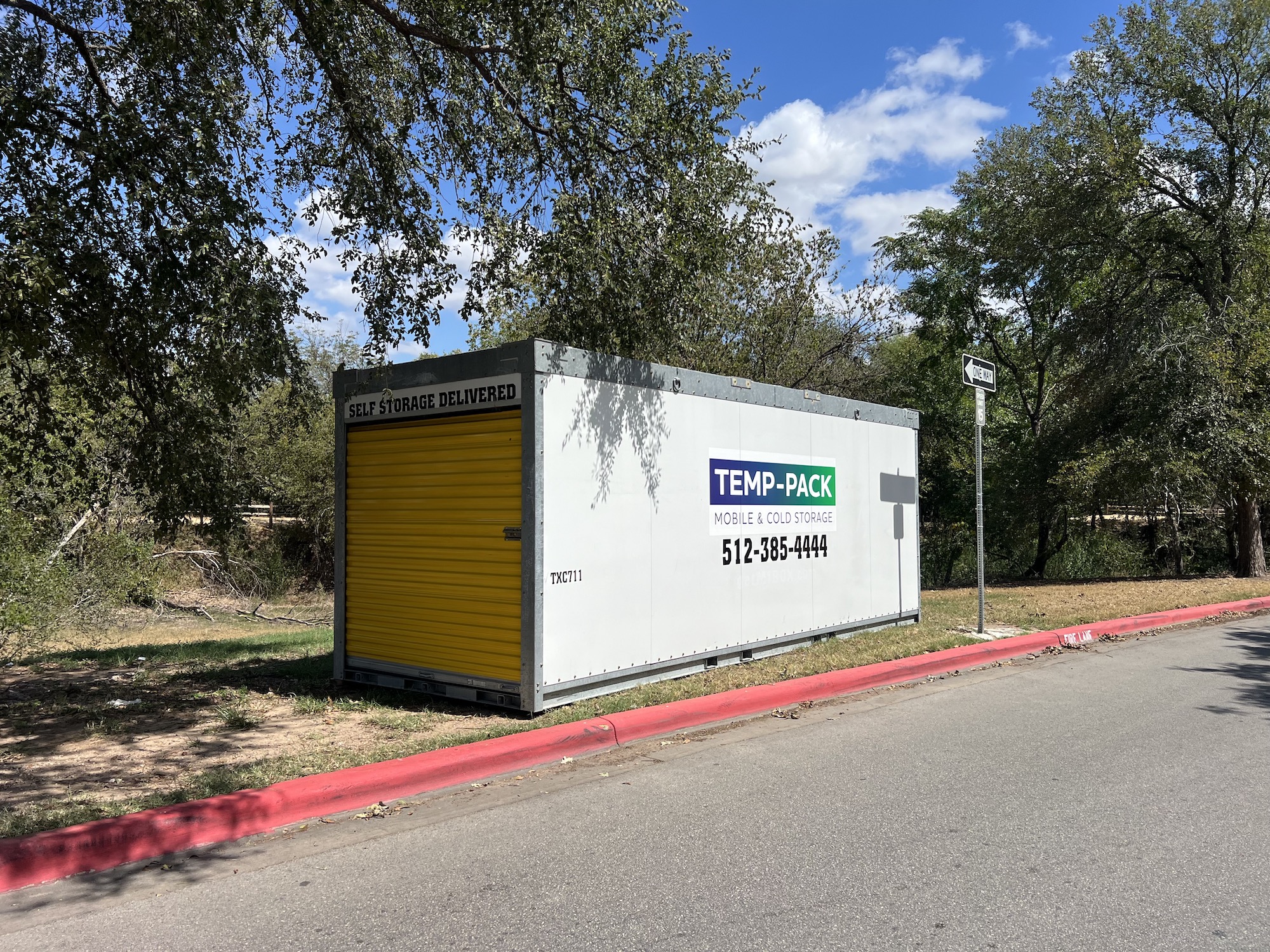
Our mobile containers give ordinary business goods a place while the workplace changes around them. Furniture can leave a room being remodeled, fixtures can wait between locations and stock can be organized for the next stage. The container brings that temporary space into the project, with the equipment and rental arrangement connected to your team.
Choose the arrangement around how the goods will be used. A container at the property can keep project stock nearby; another address or a facility stage may fit goods that can stay packed. Our storage at your property and container moving pages explain those different paths.
Decide where the contents need to stay
At the business or project site
Consider a container nearby when the team needs access during the work. Review the standing area, doors, delivery approach and permission with the property or site manager.
At a TEMP-PACK facility
Discuss facility storage if the property cannot accommodate a unit or if the goods can remain packed elsewhere. Confirm the location, conditions, access procedure and later redelivery.
Between addresses
For a relocation or a changing project site, include both addresses and the intended load. Confirm the route, access, timing and any storage between dates.
Choose the container using the load and access needs
List the furniture, stock, tools, supplies and equipment you plan to store. Measure the items that cannot be taken apart and note heavy goods or anything needed during the rental.
TEMP-PACK lists 8, 16 and 20 foot container options. Compare them using your inventory and packing plan. Ask about the usable internal dimensions, door opening and load limit of the exact unit offered.
Allow for the way goods will be loaded and retrieved. A room estimate cannot establish how many business fixtures, cases or pieces of equipment will fit. If more than one unit may be needed, include their availability, placement and combined charges in the discussion.
Organize the goods around the people using them

With TEMP-PACK, commercial storage containers are part of a rental plan for ordinary furniture, fixtures, equipment and approved stock. The useful space is shaped by the people returning to those goods: a department collecting furniture, a crew working through room stages or staff replenishing inventory.
Group the load by its next use and identify what needs to come out first. One team member can maintain the inventory while the people using the goods coordinate access and keys. Follow retail storage for stock changes or remodeling storage for a work area being cleared. Those project details help connect the container with the rental period and return plan.
Check placement, permissions and daily access
Share the exact business or project address and proposed position. Include the site contact and any landlord, property manager, event organizer or other approval needed before placement.
| Planning point | Details to discuss |
|---|---|
| Approach | Gates, turns, parked vehicles, overhead restrictions and limits affecting the delivery equipment. |
| Standing area | Surface, slope, drainage and nearby obstacles. Ask what is suitable for the unit offered. |
| Doors and loading | Space to open the container, carry goods and retrieve items during the project. |
| Business activity | Staff and customer access, work crews, vendors and other deliveries around the proposed position. |
| Permission and timing | Property rules, approved position, delivery windows and the contact for site changes. |
| Collection route | Access that can remain available until the unit is collected or moved. |
Ask for the requirements of the exact container and delivery equipment. A size label does not confirm that a unit can use a particular approach or parking area. Obtain any required permission before planning a street, verge or shared space.
For moving, repeat the site review at the destination. Contact TEMP-PACK before attempting to move or reposition a rented unit.
Assign loading, access and protection responsibilities
Agree who packs, loads and unloads. Ask which tasks, materials or help are included and arrange anything else separately. Delivery of a container does not by itself confirm a full packing or labor service.
Organize the contents around the people who will use them. Label goods by project stage, department or owner, and decide who maintains the inventory and holds the keys. Include vendor returns and access needed before the work ends.
Follow the loading and securement instructions for the unit supplied. Ask about weight distribution, heavy items, restraints and locks, including what you must provide. Discuss the load before any container transport is agreed.
Review the rental requirements for insurance or any offered protection. Ask what is covered, what is excluded and who is responsible for the goods, container and placement area. Check your own policy if you intend to rely on it, and keep the rental terms with the booking records.
Connect storage with the next business address

A business move or renovation does not always leave the next space ready when loading begins. Your container plan can include a facility stage, connecting the goods packed at one property with a later return or delivery. Keep the inventory and the goods needed during that interval clear as the project moves forward.
Our team discusses the offered space, storage conditions, access and transport with you. Include any retrieval before redelivery, the receiving contact and the expected next address. Review facility storage for that stage, then use mobile storage pricing to bring the container, rental period and movements into the complete quote discussion.
Plan the work from first delivery to collection
1. Describe the business project
Share the address, inventory, preferred start date and expected rental period. Explain how often you need access and if facility storage or another address forms part of the plan.
2. Confirm the unit and arrangements
Review available equipment, site requirements, charges and terms. Confirm who handles packing, loading and access. Agree the unit and delivery slot before treating dates as booked.
3. Arrange changes and the final stage
Keep access available and contact the team if work or dates change. Agree an extension, loaded transport or empty collection as needed. Confirm how the unit should be left and when billing stops.
See the TEMP-PACK rental process and ask who to contact about a change to your project.
Get the full cost for the project dates
Include the preferred delivery date, expected finish and any fixed property or handover deadline. Explain which dates may change so the minimum term, billing and extension process can be reviewed.
- Available container and size
- Delivery and empty collection at the exact address
- Rental period, billing and any extension
- Loaded transport, facility storage and redelivery if needed
- Applicable tax, protection and other charges
- Changes, cancellation and notice requirements
- Any packing, loading, materials or other help to arrange
Compare quotes using the same tasks, dates and addresses. Include any separate labor or transport still needed. Confirm the total and responsibilities rather than assuming storage will remove every other project cost.
Use a separate plan for refrigerated goods
Ordinary dry storage and refrigerated storage are different services. If the goods need refrigeration, describe the required conditions, quantity, access and dates before selecting equipment.
Discuss the available trailer, site, power and operating responsibilities with TEMP-PACK. Confirm compatibility for the particular goods; an industry name or business category does not establish suitability for a product or regulated use.
Review refrigerated business applications and request a cold storage quote. Keep furniture or equipment storage separate in the request if the project needs both.
Confirm the business address and route
TEMP-PACK is based in Buda and publishes service around Austin, San Antonio and nearby Central Texas communities. Give the exact address and ZIP code, plus access and the requested dates, for the team to review.
For a move or a change of project site, include both addresses. Review the service locations and ask about the proposed route; an area name does not confirm a unit, delivery slot or particular site position.
Customer experiences with TEMP-PACK


Click360 mobile storage recognition
2026 Click360 B2B Business Leader Awards
View the Click360 mobile storage award linked from TEMP-PACK’s website. Read the award page for the category and its published details.

Questions before you rent
What is commercial portable storage?
It is a rented container arrangement for approved business belongings, equipment, stock or supplies. Discuss keeping it at your property, facility storage or transport between addresses according to the project.
Which industries can review storage options here?
The choices cover restoration, real estate, remodelers, professional businesses, event planners, retail, moving companies, healthcare and pharmacies, senior care and higher education. Confirm suitability for your contents and site.
Can the container stay at my business?
Describe the proposed position, approach, surface and access. Confirm property permission and the space needed for delivery, use and collection with the team before booking.
What if there is no room at the property?
Ask about facility storage. Confirm the location, conditions, access procedure, charges and later redelivery. Explain if staff need to retrieve goods before redelivery.
Can a loaded container move to another site?
Share both addresses, the load and requested dates. Confirm the route, equipment and access at each end, including any facility storage between dates.
How do I choose a size for business contents?
Compare the published 8, 16 and 20 foot options using an inventory and measurements of large items. Confirm the offered unit’s usable dimensions, door opening and load limit. Include access space and heavy goods.
What should I check with a property manager?
Discuss the position, permission, delivery and collection windows, shared access, parking and any site rules. Have a contact available for changes to the property arrangements.
Can staff access goods during the rental?
Plan placement, door access and packing around the items needed. Agree who maintains the inventory and holds keys. For facility storage, confirm the separate access procedure before choosing that arrangement.
Who packs and loads the container?
Confirm which tasks and materials are included in the booking and arrange other help separately. Container delivery and transport do not by themselves confirm a full packing or labor service.
Can I store sensitive equipment or records?
Explain any environmental, handling, confidentiality or protection requirements before choosing storage. Confirm permitted goods and equipment suitability. Dry storage is not a guarantee of climate control or specialist protection.
Does the healthcare option include medicines or clinical materials?
Do not assume suitability from the industry label. Discuss ordinary approved belongings and equipment separately from goods requiring specialist conditions. Obtain confirmation for the exact goods, conditions and service before loading.
What if some stock needs refrigeration?
Use the separate cold storage request and describe the goods, required conditions, power, site and dates. Discuss equipment compatibility and operation before booking. A dry storage container does not provide refrigeration by inference.
How long can a business rent a container?
Share the expected project dates and confirm the minimum term, billing period, extension process and collection notice for the available unit. Contact the team if the schedule changes.
What should the commercial storage quote include?
Include the unit, address, rental period, delivery and collection, plus any transport, facility storage and redelivery. Ask about tax, protection, other charges and changes, and confirm separate labor or materials.
What happens when the work ends?
Agree empty collection or the next transport stage with TEMP-PACK. Confirm how the unit should be left, access, the scheduled date and when billing stops.
Get a quote for your business project
Have the address, inventory and dates ready. Explain where the contents need to stay and any transport or access requirements so TEMP-PACK can discuss the full rental plan.
For goods needing refrigeration, request a separate cold storage quote.