


Separate the work area from the goods you need to store
Storage containers for remodeling can be part of a plan for moving belongings out of rooms and keeping approved tools or materials at the project site. Begin with the work sequence, the goods and the people who need access, then ask TEMP-PACK to confirm a suitable unit and arrangement.
Professional remodelers, construction businesses and crews need to coordinate contractor inventory with client belongings. Homeowners doing a DIY project and business owners renovating premises need the same decisions about permission, packing, placement and return, even when no professional crew is involved.
Describe the exact materials, tools and contents before loading. Construction use does not establish that every product is accepted or that a dry unit provides the conditions goods need. Confirm permitted contents, the offered unit, dates and responsibilities with the team.
Request storage for the remodeling plan
Choose Storage for a storage request, Moving for a load changing address, or Both if the plan needs both. Enter the email and phone details requested. Storage and Both show storage location choices; Moving and Both ask for a final ZIP code.
Have the project ZIP code, preferred dates, inventory and site contact ready. Continue to the TEMP-PACK quote service, then confirm contents acceptance, unit, placement, handling responsibilities, any facility storage or transport and full charges. A submitted request does not establish an automatic booking.
Need help choosing?
Call 512-385-4444
Get Free Quote
Get Free Quote
Keep client contents separate from crew inventory
Construction materials
List the exact products, quantities, measurements and conditions they need. Ask TEMP-PACK about acceptance and the offered unit’s requirements before loading. The phrase construction materials is not blanket permission for every building product or its packaging.
Tools for the crew
Record who owns the tools and who can retrieve them. Group approved equipment by the work stage and identify items needed first. Confirm permitted contents, load limits, key responsibility and the route crews will use rather than assuming storage guarantees productivity or security.
Homeowner belongings
Identify furniture and personal goods leaving the rooms being remodeled. Agree the client’s permission, condition record, packing and return order. Keep belongings needed during the project identifiable so access does not depend on unpacking the entire load.
Business contents
Separate the client’s equipment, stock and other belongings from contractor materials. Assign an owner and receiving contact for each group. Identify goods the business needs while work continues and coordinate their retrieval with staff and customer access.
For a DIY remodel, the homeowner may be the rental contact, packer and key holder. For professional work, agree those roles with the client and contractor before delivery. A clear division of tasks does not mean rental includes labor or that responsibility for the belongings transfers to TEMP-PACK.
Clear the rooms for the work ahead
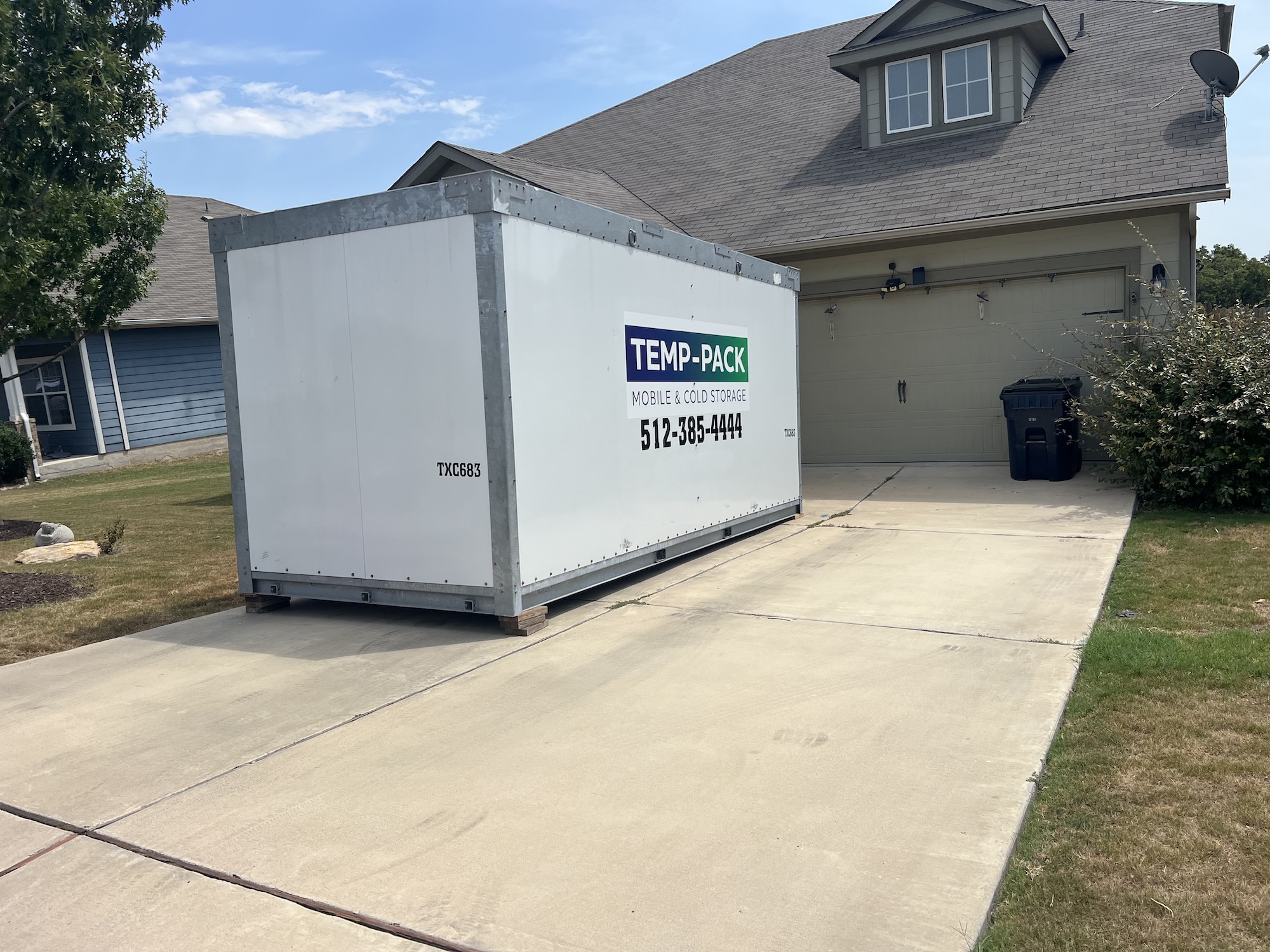
Home renovation storage starts with the rooms you need to clear. Our mobile containers provide space for approved furniture and packed belongings during the agreed rental period. Keep everyday items with the household, and identify the furniture and boxes that can stay packed while the work moves from one room to another.
Give each packed group a room label and identify the items needed first when that room is ready. Bring large furniture measurements and the inventory to our container size discussion. The published 8, 16 and 20 foot options are a starting point for matching the equipment to the load and site.
Agree the workflow from approval to return
Approve the contents and rental
Identify the person who can approve placement, contents, payment and changes. Obtain client permission for moving belongings into storage. Give TEMP-PACK enough information to confirm accepted goods and their required condition before loading begins.
Prepare the inventory and handling plan
Label goods by owner, room or work stage and record quantities and condition notes. Measure large or awkward items. Agree any dismantling, packing, lifting and loading tasks, including the people and equipment required. Ask about load securement for the exact unit and any movement.
Control retrieval during the project
Agree key holders and authorized client or crew access. Identify items needed early and plan a retrieval sequence consistent with the load and unit. Update records when tools, materials or belongings are removed or returned, especially if the crew or project contact changes.
Return goods to the responsible person
Have the project lead or homeowner confirm which rooms or work areas are ready to receive goods. Agree the unloading order and person receiving client belongings, tools and remaining materials. Keep the return plan separate from the later empty unit collection.
A storage arrangement does not make construction work safe or replace the site’s responsibilities. Coordinate stock routes and access with the responsible contractor, property contact and occupants. Do not rely on the presence of a container as proof of a safe or organized work environment.
Review placement with the property and project contacts
For storage at the home or work site, confirm permission with the owner, landlord or site manager and check applicable requirements. Describe the proposed standing area, how the unit relates to the work and what access must remain usable.
Tell TEMP-PACK about gates, turns, overhead obstructions, surface conditions, slope and available space. Ask the team to confirm delivery and collection access for the exact equipment. Include the unit door opening and carrying route; do not assume a driveway or parking area is suitable from nominal size alone.
Coordinate the position with occupied rooms, staff or customer routes, contractor deliveries and emergency access. Identify who receives the unit and directs the driver. Ask the project contact to review any later fencing, scaffolding, materials or parked vehicles that could change the collection approach.
Give crew inventory and client belongings their own plan

Use remodeling storage containers with a clear distinction between client belongings and the crew’s accepted tools or materials. Label each group by owner and work stage, and name the people who can retrieve it. Keep the items needed for the next stage identifiable in the loading plan rather than mixing them through the client’s packed furniture.
At the end of a work stage, record the tools and supplies that leave the container and the belongings still waiting to return. Tell the key holder which crew needs access next. For a retail renovation, keep the business’s trading stock and display items identified separately from contractor inventory.
Confirm fit, handover and conditions for the load
TEMP-PACK lists nominal 8, 16 and 20 foot mobile storage options. Prepare the inventory and review container size selection with the team. Confirm the exact usable dimensions, door opening, permitted load, site fit and availability. Length and room estimates do not establish capacity for dense or awkward construction goods.
At handover, discuss and check the unit’s cleanliness, dryness, condition and proposed use before loading. Ask about its lock arrangement, permitted contents and any environmental limits. Use packing appropriate for the approved goods and agree who supplies it. Rental does not guarantee protection against weather, theft, damage or contamination.
Ask about insurance and protection requirements with the client, contractor and responsible insurer. Confirm who is responsible for belongings, tools, handling and key custody. Do not assume the rental covers contents or that a condition record guarantees reimbursement.
| Storage plan | Confirm |
|---|---|
| At the project | Placement permission, access, accepted goods, retrieval and collection route. |
| At a facility | Availability, specific conditions, access arrangements, transport and return. |
| Changing address | Both addresses, approved load, handling requirements, dates and receiving contact. |
If the unit cannot stay on the property, discuss facility storage conditions and access. Confirm the specific environment, retrieval arrangements and any transport or redelivery. A dry portable container is not a climate controlled room.
If goods must change address, review moving and loaded transport with the team. Confirm route availability, access and loading requirements before arranging a movement. For the broader service, see mobile storage.
Match a different project to its own storage plan
Planned remodeling storage is separate from the assessment and treatment of damaged belongings. If the project follows water or fire damage, use restoration project storage planning. Have affected goods assessed and obtain supplier acceptance before loading; a rental container is not a drying, cleaning or decontamination service.
For a store remodel with merchandise, displays and trading access, see retail inventory storage. Other commercial projects can start with business storage applications. Keep the goods, conditions and handling responsibilities specific to the job.
Return the belongings as the rooms become ready

Storage during renovation extends through the return of the final goods. Have the homeowner or project lead identify the receiving rooms and the order for bringing belongings back. Share changed dates with TEMP-PACK and the people handling the goods, especially when one room finishes before the rest of the project.
After the belongings return, identify any crew tools or remaining materials that still need a destination. Tell TEMP-PACK when the unit will be empty for the agreed collection, or discuss a further storage or transport stage. See our process for the container sequence from delivery through return.
Quote the full period and agree schedule changes
Request a quote covering the unit, period, delivery and collection, plus any loaded transport, facility storage or redelivery needed. Ask about separately arranged packing materials, labor and loading equipment, taxes and applicable protection or access charges. Compare alternatives using the same inventory, dates, trips and handling tasks; do not assume a guaranteed saving.
Confirm the minimum term, billing cycle, cancellation and rescheduling conditions. Ask how much notice an extension or collection needs. If the work schedule changes, contact TEMP-PACK before the expected finish to discuss availability, revised dates and charges. A contractor delay does not automatically extend the rental.
Before collection, confirm that goods have gone to the agreed destination, the unit meets return conditions and the route remains accessible for the equipment. Assign the receiving contact and ask when rental billing stops. Review mobile storage pricing and the rental terms alongside the quote for the exact project.


Click360 mobile storage recognition
2026 Click360 B2B Business Leader Awards
View the Click360 mobile storage award linked from TEMP-PACK’s website. Read the award page for the category and its published details.

Remodeling storage questions
Can professional remodelers and DIY homeowners request storage?
Yes, discuss the project, goods, address and dates with TEMP-PACK. A professional contractor should agree roles with the client and site contact; a DIY homeowner needs the same placement, handling and rental decisions. Confirm equipment availability and terms for the specific request.
Can construction materials and tools be stored?
Provide the exact items, quantities, condition and requirements before loading. TEMP-PACK must confirm permitted contents and suitability for the offered unit. Construction use is not blanket acceptance of every product, tool or packaging type.
How should client belongings be separated from crew goods?
Record ownership and label items by client, room or work stage. Keep client permission, key responsibility and receiving contacts clear. Agree what can be retrieved during work and update the inventory when items enter or leave storage.
How do I choose a size for materials and furniture?
Prepare an inventory, measure awkward items and identify retrieval needs. The published options are nominal 8, 16 and 20 foot units. Confirm exact dimensions, door opening, permitted load and availability; a room estimate does not establish fit for construction goods.
Can the unit stand in a driveway or work area?
Confirm owner or manager permission and applicable requirements, then give TEMP-PACK the proposed location and approach details. Ask about exact equipment access, surface, slope, door opening and collection. A driveway or parking area is not automatically suitable.
Who handles packing, lifting and loading?
Agree the people, equipment and materials needed before delivery. Confirm dismantling, packing, lifting, loading, securement and unloading requirements for the exact unit and any movement. Rental should not be assumed to include crew labor or handling equipment.
How can crews retrieve tools during work?
Identify goods needed first, label them consistently and agree a retrieval plan suited to the packed load. Assign authorized crew and key holders and keep return records. Coordinate the route with the site contact and occupants; storage does not guarantee productivity or worksite safety.
What should I check at handover?
Discuss cleanliness, dryness, unit condition, locks, permitted contents and environmental limits before loading. Confirm packing, contents protection and insurance responsibilities with the client and contractor. Rental does not guarantee against theft, weather, damage or contamination.
Can goods go to a facility or another address?
Discuss availability, the offered facility conditions, access arrangements and the movements needed. For transport, provide both addresses and the approved load. Confirm handling requirements, route scope, receiving access and full charges rather than assuming movements or labor are included.
Does remodeling storage treat water or fire affected belongings?
No. Rental is not drying, cleaning or decontamination. Have affected belongings assessed through the responsible restoration specialists and obtain TEMP-PACK’s contents acceptance before loading. Use the separate restoration storage plan for that project context.
What if the construction schedule changes?
Contact TEMP-PACK before the expected end to discuss availability, an extension and revised charges. Confirm changed delivery or collection dates and access. A project delay does not automatically extend the rental or reserve another movement.
What should the quote and return plan include?
Ask about unit rental, period, delivery, collection, transport, facility storage, redelivery and separately arranged materials or labor, plus taxes and applicable charges. Confirm changes, cancellation, minimum terms and return condition. Agree who unloads, the collection contact and notice, and when billing ends.
Discuss storage for the remodeling work sequence
Have the goods, ownership, exact address, access needs and preferred dates ready. Confirm permitted contents, the offered unit, handling responsibilities and complete rental charges.