
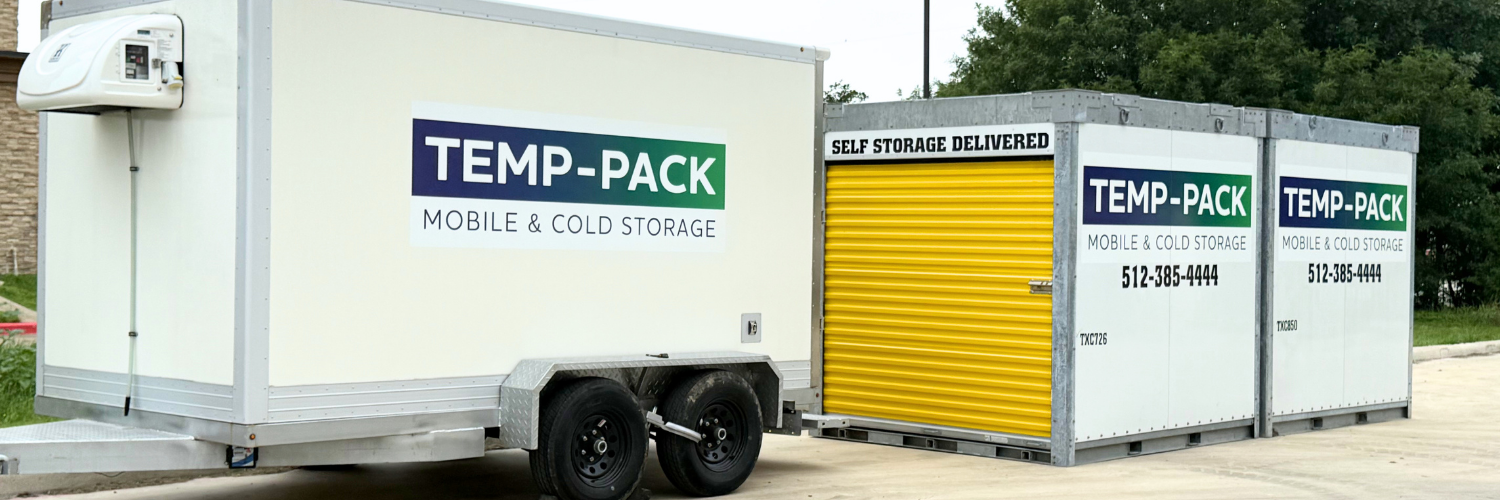
Use the right tool for the job. Nobody frames a house with a screwdriver, and nobody should park a walk-in cooler’s worth of brisket in a moving container. People still mix up climate-controlled storage pods and refrigerated trailers, and in Central Texas that mix-up gets expensive. When August sits over 100 degrees, the wrong box can warp a dining table or spoil a catering order.
Short version: one keeps your stuff out of extreme heat and humidity. The other actually refrigerates. What you’re storing decides which one you need.
What a Climate-Controlled Storage Pod Actually Does
A climate-controlled storage pod is a portable container that holds what’s inside at a moderate, stable temperature and humidity. It gets dropped at your driveway or job site. You pack it on your schedule. Then it stays put or goes to a climate-controlled warehouse until you want it back.
Moderate is the point. Climate control keeps wood from warping, glue from softening, photos from sticking, and mold from starting. It does not keep anything cold. If you’re picturing milk staying fresh in one of these, it won’t.
STORAGE SMART
“Climate controlled” means the storage environment stays in a safe middle range, roughly comfortable-room territory. It’s built to prevent warping, cracking, and mold, not to chill food. If a vendor can’t tell you where your container will actually sit, ask.
When Climate-Controlled Storage Pods Are the Right Call
Pods work when you need flexible space for things that hate heat but don’t need a fridge:
- A gap between homes, so furniture sits somewhere safe instead of a hot garage
- Renovations, when floors, cabinets, and furniture need to get out of the way for weeks
- Staging a house and clearing the clutter buyers shouldn’t see
- Business overflow: documents, retail inventory, seasonal displays, office furniture
- Wood furniture, electronics, instruments, leather, artwork, family photos
CENTRAL TEXAS TEMP FACT
The inside of a sealed, non-insulated container parked in direct Texas sun can run far hotter than the outdoor air. By early June that’s vinyl-warping, candle-melting territory, which is exactly why where your container is stored matters as much as what’s in it.
What a Refrigerated Trailer Does
A refrigerated trailer (also called a cold storage container or reefer) has a powered refrigeration unit that holds a set temperature around the clock. Cooler range or freezer range, depending on the unit. That’s actual cold storage, delivered to your site.
Use it for perishables: restaurant and catering inventory, event and festival drinks, competition BBQ meats, floral orders, and temperature-sensitive pharmacy or healthcare products. It’s also the fastest fix when a walk-in dies mid-service and you need cold space in the parking lot by tomorrow.
STORAGE SMART
Ask about power before you book a refrigerated trailer. Confirm what your site can supply and what the unit requires, especially for outdoor events where an outlet isn’t twenty feet away.
Head to Head: Four Questions That Settle It
- Can it spoil? If yes, you need refrigeration. Food, drinks, flowers, and medication go in a refrigerated trailer. Everything else starts in the pod column.
- How long will you store it? Pods work for a weekend or a year. For household goods, long-term facility storage is usually cheaper. Refrigerated trailers are typically rented by the event, the project, or the season. Running refrigeration all day costs more than passive protection.
- Where will it sit? A pod can stay in the driveway or move to a storage facility. A refrigerated trailer needs reliable power and room for the unit to run. Think about access too. Delivery drivers need a level spot to set the container down.
- Do you actually need both? Restaurant remodels are the usual case. Dry goods, furniture, and decor go in a storage container. Perishables go in a refrigerated trailer out back. The kitchen keeps running. Renting both from one company keeps that simpler. TEMP-PACK is a locally owned company in Buda that delivers portable storage containers and refrigerated cold storage across Austin and San Antonio. One call covers the project, and they can point you to the cheaper option instead of whatever a national call center is pushing that day.
FROM THE DELIVERY CREW
A level, accessible drop spot saves everyone time. Ground-level delivery systems like TEMP-PACK’s TempTrack Hydraulic Lift set containers down flat, so there are no ramps to climb and no driveway damage to argue about later.
The Quick Answer
Furniture, records, electronics, inventory that just needs to stay out of the heat: climate-controlled storage pod. Anything you’d put in a fridge or freezer: refrigerated trailer. A remodel or a big event that needs both: one of each, ideally from the same local provider.
CENTRAL TEXAS TEMP FACT
Cold storage demand in Central Texas spikes twice a year: summer event season and the holiday catering rush. If your event lands in either window, book your unit early rather than gambling on last-minute availability.
Still not sure which side of the line your project falls on? Tell a local provider what you’re storing and let them sort it. In the Austin and San Antonio area, that’s a five-minute call to 512-385-4444 or a quote request at temp-pack.com.
Frequently Asked Questions
What’s the best climate-controlled storage pod setup for a summer move in Austin?
For most 3-4 bedroom homes, a 16 x 8 ft container is the usual fit. An 8 x 8 ft unit covers one or two rooms. A 20 x 8 ft unit handles larger houses. For a summer move, the bigger factor is where the container waits between homes. Warehouse storage in a climate-controlled facility protects wood furniture and electronics better than a container sitting at the curb. When in doubt, size up. Cramming a full house into a too-small unit costs more in damage than the next size costs in rent.
Can a refrigerated trailer replace a walk-in cooler during a restaurant remodel?
Yes. That’s one of the most common uses. A refrigerated trailer on-site holds perishable inventory at a set temperature so the kitchen can keep operating while the walk-in is down. Ask for a unit sized to your inventory, confirm power with your electrician, and schedule delivery a day before demo starts so you’re never without cold space.