
It’s 6 p.m. on a Friday, the kitchen’s in the weeds, and someone yells that the walk-in isn’t cold anymore. That’s the moment emergency refrigeration rental stops being a hypothetical and becomes the only thing standing between you and a walk-in full of spoiled inventory.
A failed walk-in cooler or freezer doesn’t wait for a convenient time. It happens during a rush, over a holiday weekend, or the night before a big delivery. What you do in the first hour matters almost as much as how fast a repair tech shows up.

The First 30 Minutes After Your Walk-In Fails
Don’t open the door more than you have to. Every time it opens, cold air spills out and the clock speeds up on whatever’s inside.
Check the obvious things first: is the unit plugged in, has a breaker tripped, is the thermostat set correctly. If none of that explains it, you’re likely looking at a compressor or refrigerant issue that needs a technician — and that repair could take hours or days depending on parts availability.
Signs Your Walk-In Is Actually Down (Not Just Acting Up)
A few signs separate a real failure from a temporary blip: the compressor isn’t running at all, condensation is building up fast, or the internal temperature has climbed more than a few degrees over the last hour. If any of that’s happening, call your rental company before you even finish diagnosing the problem. Refrigerated trailers get booked out during peak season, and the sooner you’re in the queue, the sooner one shows up.
| 📞 Field Note: Call for backup refrigeration the moment you suspect real trouble — not after the repair tech confirms it. If the compressor turns out fine, you cancel the rental. If it’s dead, you’ve already saved yourself hours of downtime. |
Why Walk-In Failures Turn Into Bigger Problems Fast
A few hours without cooling doesn’t sound catastrophic on paper. In practice, it’s a full inventory of proteins, dairy, and prepped food sitting in a temperature danger zone, a health inspector who won’t accept “it just happened” as an excuse, and a kitchen that can’t take orders until the problem’s solved.
Restaurants and food service businesses feel this hardest, but it’s not limited to kitchens. Grocery distributors, caterers, and pharmacies all carry temperature-sensitive product that can’t just wait out a repair timeline.
What Emergency Refrigeration Rental Actually Provides
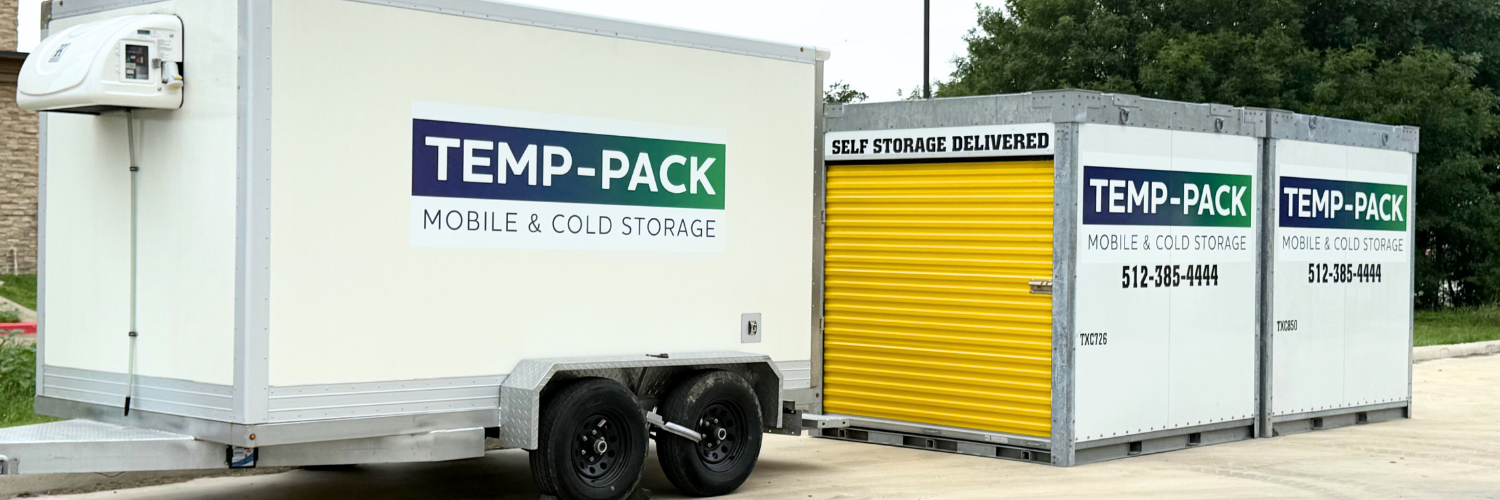
An emergency refrigeration rental is a self-contained, refrigerated trailer that plugs into a standard outlet and holds your inventory at whatever temperature you set — cooler or freezer — while your permanent unit gets fixed or replaced.
Most 8’x12′ units handle a full walk-in’s worth of inventory without crowding, and they arrive already clean, sanitized, and set to temperature. You’re not waiting for a unit to cool down before you can start loading product into it.
How Fast Can You Actually Get One?
This is where the rental company matters more than the equipment. Temp-Pack has built a reputation in Central Texas for fast-turn emergency cold storage, which is why restaurant owners call the moment a compressor dies rather than waiting to see how bad it gets. A local team with units already staged nearby can turn around delivery in a fraction of the time a national rental chain needs to route a trailer in from out of state.
Setting Up Your Rental Unit While Repairs Are Underway
Once the trailer arrives, placement matters. It needs level ground, clear access for loading, and a nearby 110-volt, 20-amp outlet — no generator required for most units. Keep it close enough to your kitchen or stockroom that staff aren’t making long trips back and forth during service.
Plan for the unit to stay through the full repair window, not just overnight. Compressor parts and refrigerant repairs can stretch into multi-day jobs, especially if parts have to be ordered, and it’s easier to keep a rental a few extra days than to scramble for a second one if the first repair estimate runs short.
| 🧊 Plot Twist: Most operators budget for the rental cost and stop there. The bigger number is almost always the inventory you don’t have to throw out. A few hundred dollars for a trailer is cheap insurance against a walk-in’s worth of spoiled product and a lost weekend of service. |
Choosing Between a Repair-and-Wait Plan and a Rental Backup
Not every walk-in failure needs a rental. A quick breaker reset or a thermostat fix might solve it in twenty minutes. But if a technician can’t get on-site same-day, or the repair involves ordering a part, waiting it out is a bet against your own inventory and your health inspection.
The math is usually simple: compare the cost of a short-term walk-in cooler rental or refrigerated trailer against the cost of one lost inventory load and a day of reduced service. For most restaurants and food businesses, the rental wins that comparison easily.
If you’re not sure which category your situation falls into, it’s worth checking current cold storage rental pricing so you have real numbers in front of you before deciding.
Stay Cool Under Pressure
A failed walk-in feels like a five-alarm problem at the moment, but it doesn’t have to become one. Call for backup cooling early, keep the door shut while you wait, and let a rental trailer buy your kitchen the time it needs to get the real fix done right. When the next compressor gives out at the worst possible hour, you’ll be glad you already know who to call.
FAQs
What’s the best emergency refrigeration rental option when a walk-in cooler fails?
For most restaurants and food businesses, an 8’x12′ refrigerated trailer is the best fit — it holds a full walk-in’s worth of inventory, plugs into a standard outlet, and arrives already sanitized and set to temperature. Larger operations may need a bigger unit depending on inventory volume.
How much does emergency refrigeration rental typically cost?
Rentals typically start around $150 for a standard trailer, with final cost depending on rental length and unit size. Compared to the cost of spoiled inventory and lost service during a walk-in failure, most operators find it pays for itself within the first day.